
The Research Techniques Seminar Series highlights novel and exciting experimental techniques, instrumentation approaches, and detector technologies across particle physics and related fields.
The series aims to encourage discussion around detector R&D, experimental methods, calibration, test-beam studies, simulation, reconstruction, and analysis techniques, with an emphasis on work that may lead to new connections or collaborative R&D across different subfields, divisions, and institutions.
We welcome suggestions for speakers whose work would be of interest to the Fermilab community.
The speaker recommendation form takes less than 2 minutes to complete. As part of this series, we want to bring more visibility to the exciting detector R&D, instrumentation, test stands, prototypes, and experimental techniques being developed across Fermilab. The form includes an optional upload section for photos, videos, or other media from relevant projects that you would be happy for us to share. We would love to highlight these contributions on the seminar webpage and in future seminar materials.
Questions, speaker suggestions, or ideas for future topics?
Contact the series coordinators:
Sparshita Dey and
Christina Wang.
Upcoming Seminars
Upcoming Research Techniques Seminar Series talks are listed below. Additional seminar titles and Indico pages will be added once confirmed.
2027
(title and abstract TBC) | Indico page TBC
2026
(title and abstract TBC) | Indico page TBC
(title and abstract TBC) | Indico page TBC
(title and abstract TBC) | Indico page TBC
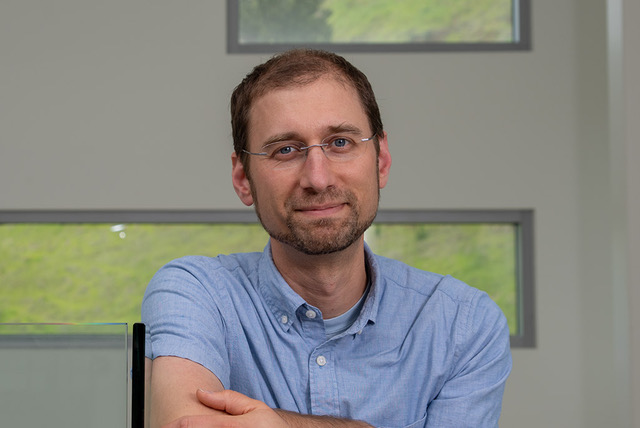
Daniel Dwyer
Dan Dwyer is a senior staff scientist in the Physics Division at Berkeley Lab, where he heads the neutrino research group. He obtained his Ph.D. from UC-Berkeley in 2007 for the measurement of reactor antineutrino oscillation with the KamLAND experiment, and then led commissioning and data analysis of the Daya Bay Experiment as a post-doc in Caltech’s Kellogg Radiation Laboratory. He received the 2014 APS Henry Primakoff Award for “innovative contributions to neutrino physics”. He joined Berkeley Lab in 2012, where he currently serves as the Technical Lead of the ND-LAr Consortium, an international consortium of over 40 institutions responsible for the design and production of the Liquid Argon Near Detector for the Deep Underground Neutrino Experiment (DUNE). In 2023 he received the APS-DPF Instrumentation Early Career Award for “his work on 3D pixelated readout technology for liquid argon time projection chambers (LArPix)”.
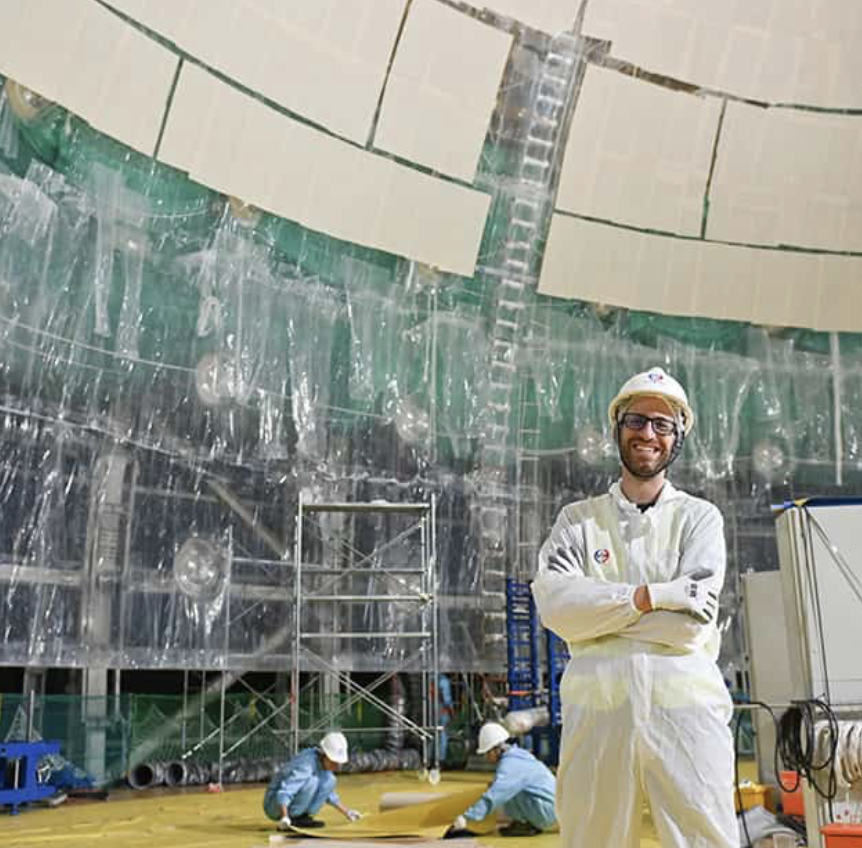
Juan Pedro Ochoa Ricoux
Pedro Ochoa-Ricoux is a Professor in the Department of Physics and Astronomy at the University of California, Irvine. He obtained his PhD from Caltech in 2009, where he contributed to one of the first hints of a non-zero θ13 mixing angle in the MINOS experiment. He then became a Chamberlain Fellow at Berkeley Lab, where he co-led the installation, commissioning, and data analysis of the Daya Bay Reactor Neutrino Experiment, which measured θ13 with world-leading precision. In 2013, he joined the Physics Faculty at the Pontificia Universidad Católica de Chile, where he continued his work on Daya Bay while also contributing to the construction of the ATLAS New Small Wheel and beginning his work on the LiquidO and JUNO experiments. He joined the University of California, Irvine in 2019, where he currently co-leads the small PMT system of JUNO and the physics working group responsible for the reactor antineutrino results. Since 2020, he has also co-led the development of simulation and reconstruction tools for DUNE ND-LAr and the analysis of data from its prototypes. He has twice been a co-recipient of the Breakthrough Prize in Fundamental Physics for his contributions to the Daya Bay and ATLAS collaborations, and has received the International Partnership Prize from the Chinese Academy of Sciences.
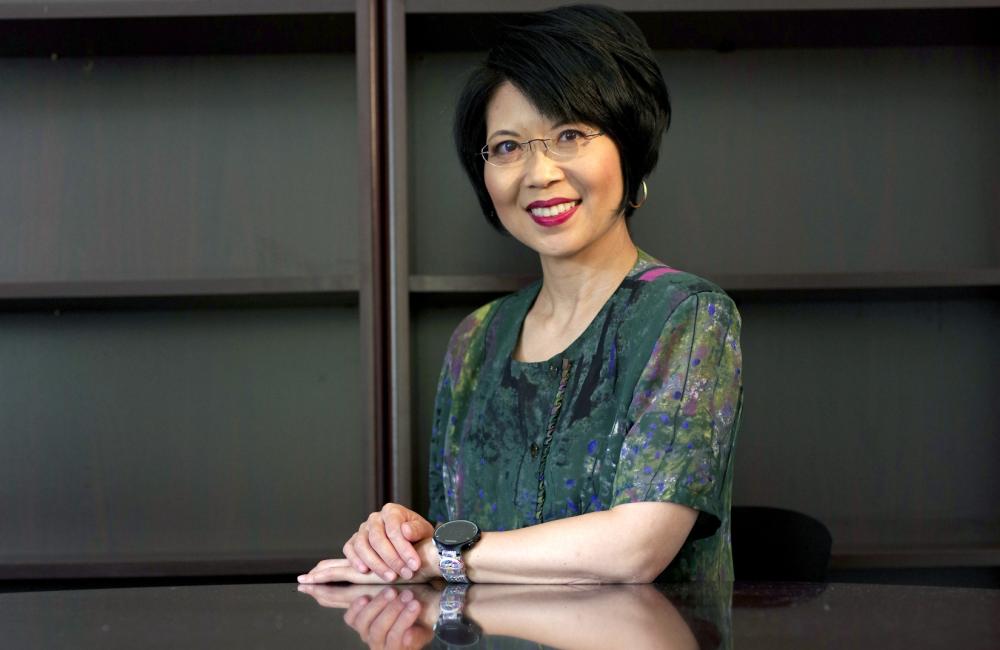
Chang-Hong Yu
Chang-Hong Yu is a senior scientist at Oak Ridge National Laboratory. Since 2008, Chang-Hong’s research has focused on the search for neutrinoless double-beta decay in 76Ge, first with the MAJORANA Collaboration and later with the LEGEND Collaboration. Within the MAJORANA Collaboration, Chang-Hong served as the Operation Manager for 7 years and worked on a parallel data-analysis effort at ORNL. In the LEGEND-1000 Collaboration, Chang-Hong’s primary focus has been research and development aimed at mitigating backgrounds. Prior to working on neutrinoless double-beta decay experiments, Chang-Hong worked in experimental nuclear structure physics, specializing in high-spin spectroscopy and the study of nuclei far from stability using radioactive ion beams.
Past Seminars
The Research Techniques Seminar Series has featured a broad archive of talks on detector R&D, instrumentation, electronics, calibration, simulation, and experimental techniques. Explore the sections below to view previous seminars.
Seminar Archive Activity
Month-by-month archive activity. Hover over cells for seminar counts.
Fewer
More
2025
2024
2023
2022
2021
2020
2019
2018
2017
2016
2015
2014
2013
2012
2011
2010
2009
2008
2007
2006
2005
2004
2003
Seminar Series Coordinators
The Research Techniques Seminar Series is currently coordinated by:
- Sparshita Dey and Christina Wang (2026–)
Past coordinators:
- Javier Tiffenberg
- Petra Merkel